Friday, October 7, 2016

LG could be making a tablet with a foldable and transparent display

The aesthetics of smartphones and tablets hasn't really changed all that much in recent years, but if a recent patent filed by LG is anything to go by we could soon see tablet-sized devices with foldable and transparent displays.

It's been known for a while now that companies like LG and Samsung are working on flexible and foldable displays and every few years it seems there's an attempt to make cool transparent screens catch on, but it looks like LG is considering combining the two in what could be the winning combination.

The recently filed patent shows a rectangular device, similar to a tablet, with a hinge in the center that allows it to fold like a book. In addition to this it looks like LG plans to make the screen completely transparent.

The way is clear

On one side of the illustrated device, there appears to be touch-sensitive multimedia controls while the other is blank, suggesting video content is displayed there, though it's not clear whether this screen would also be touch-sensitive.

patent

Since this is only a patent, it'd be foolishly optimistic to suggest we'll see such a device on the market any time soon.

That said, recently Samsung appears to have made a significant breakthrough with regards to the problems holding its foldable screens back and Panasonic demonstrated an impressive transparent TV display, so perhaps devices like this one from LG could arrive on the market sooner than we think.

Article continues below

Most-read articles You can now replace your Samsung Galaxy Note 7 replacement at all major US carriers Your chance at a completely different replacement The 10 best graphics cards in the world Upgrade your rig with one of the best graphics cards The best DualShock 4 deals in October 2016: find a cheap PS4 controller Buy an extra PS4 controller and play with friends or keep a spare charged
Source: LG could be making a tablet with a foldable and transparent display

Thursday, October 6, 2016

3M Launches World̢۪s First Tablet-Based Mobile Intraoral Scanner

ST. PAUL‚ Minn.--(BUSINESS WIRE)--Mobile tablets, commonplace in many aspects of clinical practice in health care settings, have arrived in the dental industry with the introduction of the 3M™ Mobile True Definition Scanner, a one-of-a-kind tablet-based intraoral scanner that fits in your hand.

The compact, ergonomic design is similar to rechargeable tablets that patients and clinicians use in their daily lives, allowing clinicians to move freely between operatories without power cords or carts. Flexible mounting options help to minimize workspace clutter, offering more space for the clinician and assistant to maneuver in small spaces. Informed discussion and visual patient communication is made easy with a system that can be placed directly into the hands or lap of a patient, where they can experience a cutting-edge digital visualization of their oral anatomy, and ultimately, a better understanding of proposed treatments. With easy setup – users can unbox and scan in less than an hour – the 3M Mobile True Definition Scanner can seamlessly integrate into the practice.

"The 3M Mobile True Definition Scanner takes the patient experience to another level," said Karen Burquest, digital oral care global business director at 3M Oral Care. "This scanner offers clinicians the flexibility to place the tablet in the patient's hands so they can experience unprecedented access, while the clinician educates them about the treatment process. Because the tablet is compact and operates on battery, clinicians can easily hand carry the scanner between operatories. This scanner will impact the landscape of digital dentistry."

Developed with the tradition of 3M science in mind, this new scanner is designed to deliver convenience for practitioners, as well as a memorable visual experience for the patient. "At 3M Oral Care, we are committed to inventing new products and processes that will positively impact a patients' oral health for years to come," concluded Burquest.

Restorations created from scans are proven to be accurate – and more consistently accurate – than other leading intraoral scanners, with a 99.7 percent fit rate.1 This paired with the smallest wand on the market means scanning with this system is not only comfortable for clinician and patient alike, it delivers precision clinicians can trust. With a low-price entry into digital impressioning at just $16,995, this new mobile scanner fits the size, mobility, practice requirements and budget needs of practitioners. The decision to adopt digital scanning just got a little easier.

For more information on the new 3M Mobile True Definition Scanner, visit www.3m.com/TrueDef.

About 3M Oral Care

3M Oral Care promotes lifelong oral wellness through inventive solutions that help oral care professionals achieve greater clinical, professional and personal success. Learn more at 3M.com/dental (dental) or 3M.com/ortho (orthodontics).

About 3M

At 3M, we apply science in collaborative ways to improve lives daily. With $32 billion in sales, our 90,000 employees connect with customers all around the world. Learn more about 3M's creative solutions to the world's problems at www.3M.com or on Twitter @3M or @3MNewsroom.

3M is a trademark of 3M. Used under license in Canada. © 3M 2016. All rights reserved.

1 For more information, see www.3M.com/truedef


Source: 3M Launches World's First Tablet-Based Mobile Intraoral Scanner

Wednesday, October 5, 2016

FDA warns against use of infant teething tablets, gels

(CNN) - A warning to parents and others caring for teething children.

The Food and Drug Administration is asking caregivers to stop using homeopathic teething tablets and gels.

The FDA is investigating reports of adverse reactions caused by the products, including seizures, breathing problems and lethargy.

No recall has been ordered, but drug store giant CVS has already pulled all homeopathic teething products from its shelves.

One company that makes the tablets, Hyland's, says it's cooperating with the investigation.

But it's also defending the product on its website, saying the tablets are fully tested for safety.

Copyright 2016 CNN. All rights reserved. 


Source: FDA warns against use of infant teething tablets, gels

Tuesday, October 4, 2016

NetGuide NZ - Step away from the screen: Survey finds Kiwis' eye strain is a huge problem

As the journey towards becoming a digital nation continues, the NZ optometrist community is encouraging people to think of the potential strain on their eyes over years of device use.

If you experience strained vision, headaches, sleep deprivation and dry eyes, the chances are this is because of the high energy blue light from screens, which progresses the longer people stare at their devices and switching between them.

Research from Eyezen has discovered that 87% of optometrists are concerned about the number of people coming to them with eye damage - and some of those people are as young as five years old.

Those in the 30-40 age bracket are the highest risk, with 80% of optometrists believes that they are the most affected. Teenagers are also at risk, with 19% of optometrists saying they are also in the highest risk group.

What's more, 77% of optometrists say patients are presenting with dry eyes frequently, while eyestrain accounted for 72% and headaches accounted for 52%.

Optometrist Bruce Nicholls says with many people looking at phone screens 150 times a day on top of laptop, PC and tablet screens, these only make retina strain even worse.

"What we are seeing now is that concentrated numbers of hours spent in intensive screen time while gaming and even long work days are causing noticeable symptoms in device users. Essentially over-exposure to that blue light - which occurs on the light spectrum next to harmful invisible ultraviolet light could cause significant, long term damage," he explains.

He also points out that simultaneous device use also increases the level of digital eye strain - 75% of people using simultaneous devices report eye strain, compared to 53% of people who use one device at a time.

"There are strong suspicions that high energy blue light could cause damage to the macula, which could cause loss of central vision over a lifetime of use. That is what is now being researched globally," he says.

He believes that patients under 40 should use blue light protection or blocking lenses to counteract increased screen use, particularly as it's a cumulative problem.

He says research into the harm from blue light shows the effects on our body clocks and sleep deprivation, which can also contribute to cancer, heart disease, obesity and diabetes.

"I usually prescribe it for people who have visual fatigue from prolonged screen use and it does make quite a bit of difference de-stressing their focus system - which is what it is designed to do. The pretext is that if you stop blue light from entering the eye then potentially you stop its damaging effects."

He believe tech companies are slowly starting to react to the research, as Apple has introduced technology that it says reduces blue light emission from its phones and tablets.


Source: NetGuide NZ - Step away from the screen: Survey finds Kiwis' eye strain is a huge problem

Monday, October 3, 2016

Andromeda fixes all the problems caused by Android

Hiroshi Lockheimer promises that the event on October 4 will be just as unforgettable as the one almost eight years ago, when Android 1.0 was presented. Meanwhile, every blog is talking about the Andromeda scene, the supposed successor to Android. We will give you an idea of what that could mean.

It is primarily Android Police, which in the last few days with exclusive material has got all the tech-press holding its breath. In recent reports, David Ruddock has given details about the Andromeda operating system as never before and about the corresponding demo unit from the Bison project.

The resulting Pixel laptop should come out in the third quarter of 2017. It is supposed to be the first device with the Andromeda operating system. It is the result of the work of three teams: Android, Chrome OS and Pixel. The new Pixel Laptop should be more than a Chromebook and its Andromeda operating system is supposed to turn Chrome OS features into a fully functional Android system.
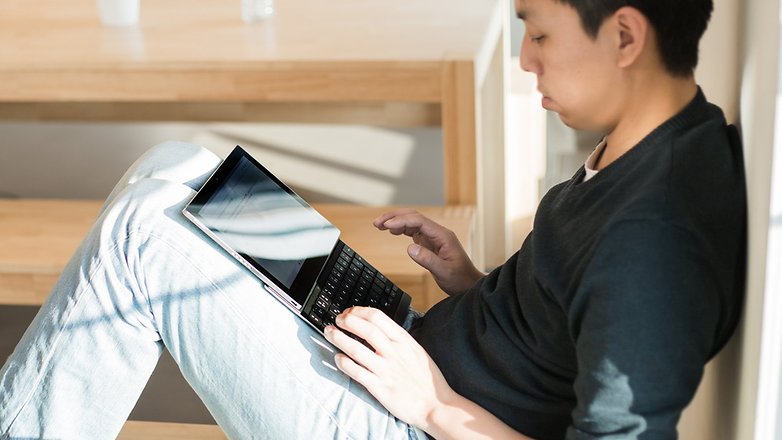
AndroidPIT Google Pixel C 8792 The Pixel C was just an Android-Tablet. / © ANDROIDPIT

The Bison device should be equipped with a 12-inch display, more powerful hardware, Wacom stylus and illuminated keyboard. The Wall Street Journal wrote back in October 2015 that the main target of the new OS would be laptops, which means that the shape and size of the demo device are no surprise. Chromebooks in their present form could become obsolete with the new Andromeda devices.

In the long term, Andromeda could also become the new standard system for smartphones and thereby replace Android. That wouldn't be so dramatic for you, as support for the Play Store remains in the new system. Andromeda offers significant advantages over Android; including seamless updates that are already part of Android Nougat or the significantly improved interface for tablets and laptops. Android boss Hiroshi Lockheimer foretells great things:

If Google releases a new smartphone operating system, then the cards will have to be re-shuffled. The company could negotiate new terms with smartphone manufacturers, under which they may use Andromeda. Then the mistakes made with Android could be fixed. Google could recover complete control over the software and the software fragmentation that has prevailed until now could come to an end. All software updates would come directly from Google.

Andromeda is the bold step that Android needs

What do you think?

For the user this would mean that the software would be identical in all devices. It would also mean that the version would always be up-to-date. In that way, all apps would work just as well on similarly-equipped devices and the latest security updates would protect as much as possible from data theft.

For the manufacturers this would mean that they can/must/need to differentiate their devices by their quality of hardware and design. Google's Pixel devices would become the act to follow, like the Surface products from Microsoft, far too expensive but highly equipped.
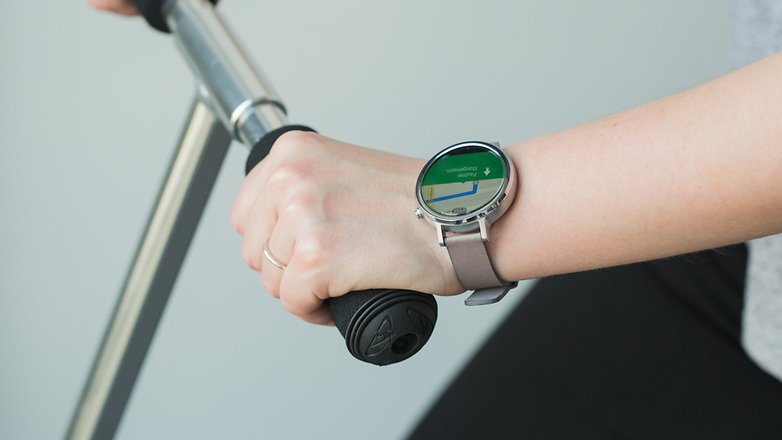
AndroidPIT moto 360 2015 34 It's the same for Android Wear as well.  / © ANDROIDPIT

Google has already shown this kind of courage with Android Wear, Android TV and Android Car. Those systems are used on smartwatches, TVs and in cars, without the manufacturers being able to modify it very much. Google seems to be able to find buyers for that kind of highly controlled software.

Whether Google can convince major manufacturers such as Samsung or Huawei to completely outsource their software development to California is doubtful. However, Lockheimer and his colleagues could oblige hardware suppliers to do so, if they bring support for Android to an end in the medium term. Andromeda could be the biggest test in Android's history and instead of becoming the hoped for solution to the great fragmentation problem, it could become just the opposite.

Let us know what you think in the comments.


Source: Andromeda fixes all the problems caused by Android

Sunday, October 2, 2016

WATCH: Bill Belichick has had enough of this damn tablet

The Patriots-Bills game started off with a little pre-game violence and apparently those feelings lingered on the sidelines.

Patriots coach Bill Belichick has had his issues with the Microsoft Surface tablets on the sidelines before, but without IT handy, the notoriously grumpy coach took matters into his own hands.

Whatever Belichick wanted that tablet to do, it clearly was not complying with his wishes. He may be a brilliant football mind, but at 64, the latest technology is still a source of weakness for Belichick. Something tells me that spike did not fix the problem.

This GIF was a good representation of the Patriots day as a whole. Despite quarterback Jacoby Brisset getting cleared to play, the offense was anemic on Sunday in a loss to the Bills. Still, things are looking up for New England as the team managed to go 3-1 in Tom Brady's absence and the signal caller will return next week for their Week 5 matchup against the Cleveland Browns.


Source: WATCH: Bill Belichick has had enough of this damn tablet

Saturday, October 1, 2016

Homeopathic Teething Tablets, Gels Harmful For Kids: US Drug Regulator

Homeopathic Teething Tablets, Gels Harmful For Kids: US Drug Regulator

Homeopathic teething tablets and gels are sold in retail stores and online in the US.

Washington:  Homeopathic teething tablets and gels may pose a risk to infants and children, the US Food and Drug Administration (FDA) has warned, recommending consumers to stop using the products and dispose off any in their possession.

Homeopathic teething tablets and gels are sold in retail stores and online in the US.

Consumers should seek medical care immediately if their child experiences seizures, difficulty breathing, lethargy, excessive sleepiness, muscle weakness, skin flushing, constipation, difficulty urinating or agitation after using homeopathic teething tablets or gels.

"Teething can be managed without prescription or over-the-counter remedies," said Janet Woodcock, director of the FDA's Centre for Drug Evaluation and Research.

"We recommend parents and caregivers not give homeopathic teething tablets and gels to children and seek advice from their health care professional for safe alternatives," said Ms Woodcock.

The FDA is analysing adverse events reported to the agency regarding homeopathic teething tablets and gels, including seizures in infants and children who were given these products, since a 2010 safety alert about homeopathic teething tablets.


Source: Homeopathic Teething Tablets, Gels Harmful For Kids: US Drug Regulator